
Originally published 2021-12-11. Reviewed and updated by Anything Pawsable on October 4, 2026.
A mobility assistance dog can help with disability-related tasks that reduce reaching, bending or repeated trips. Useful work might include retrieving an accessible item, bringing a phone, delivering a light object to a familiar helper or operating an adapted button. Choose tasks around the person's needs and the dog's welfare.
A dog is not a weight-bearing mobility aid
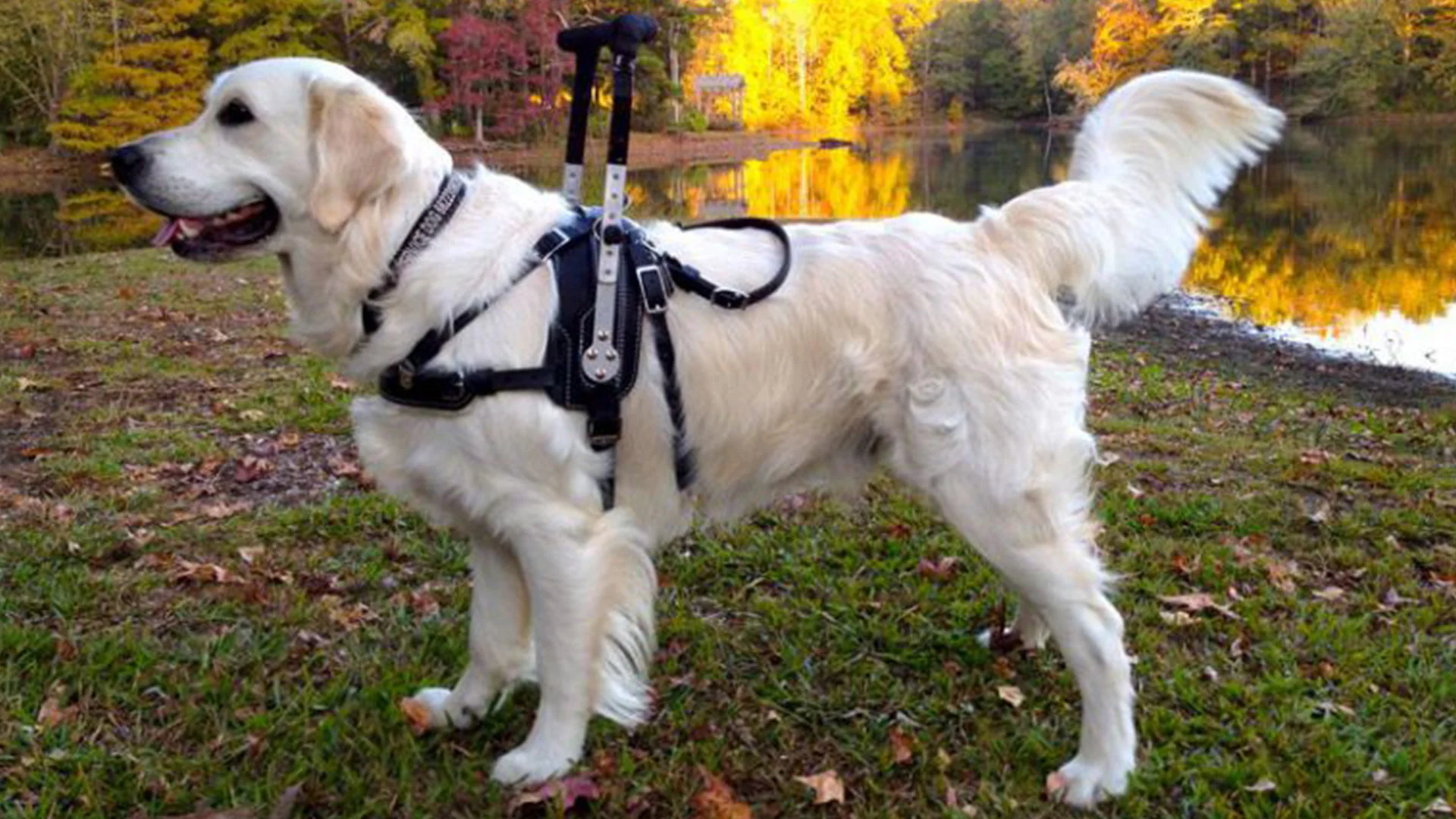
This guide does not recommend leaning on a dog to stand, transferring body weight through a brace handle, using the dog to catch a fall, pulling a wheelchair or asking it to drag or roll a person. Those activities put forces on a living animal and create risks for both members of the team. AAHA's working-dog guidance identifies increased load or strain in mobility and balance work as a concern for osteoarthritis.
Height, breed, a handler-to-dog weight ratio, a normal X-ray or a particular harness does not establish that bracing is safe. The ADA's examples of disability-related tasks describe legal coverage; they do not validate the safety of a specific training method or physical workload.
Work with the appropriate clinician or rehabilitation professional to select mobility aids and a safe transfer or fall-response plan. Ask a veterinarian familiar with working dogs about the dog's health and any proposed physical demands. An individual assessment is not a reason to promise injury-free work.
Build useful tasks without loading the dog
Start with a clearly defined, safe task and reward small steps. Retrieval objects should be light, safe to hold and within comfortable reach. Adapt handles or use purpose-built controls where necessary. Do not ask the dog to carry exposed medication, sharp objects, hot drinks or breakable glass.
A dog may be trained to bring a phone or activate an accessible call device as part of an emergency plan. It cannot be relied on to diagnose a stroke, decide what medical treatment you need, administer medication or reposition an unconscious person. Have human help and appropriate emergency arrangements available.
Choose a candidate for the actual job
No breed, size or pedigree guarantees suitability. Consider health, temperament, comfort in relevant environments, ability to learn and compatibility with the handler's daily life. Veterinary screening should reflect the individual dog and proposed work. A dog who is unwilling, fearful or physically uncomfortable needs a change in plan, not more pressure.
Owner training is permitted under the ADA. A trainer with relevant experience can help evaluate the task plan, teach accessible cues and assess behavior. Public-access readiness involves control and house training as well as disability-related work; a vest or certificate alone does not establish it.
Prepare the human handler alongside the dog’s task work. Service Dog Standards works alongside the Americans with Disabilities Act (ADA), providing training and behavior standards and foundational handler education. It gives you and your trainer shared expectations for care, practice and responsible public work. Match the individual mobility tasks and the dog’s physical workload to advice from the appropriate healthcare, veterinary and training professionals.
Plan ongoing care and rest
Discuss diet, body condition, vaccination, parasite prevention, medication and exercise with your veterinarian. Do not prescribe grain-free food, joint supplements for every dog or unproven parasite remedies as universal requirements. Vaccination requirements depend on applicable law and veterinary guidance.
Watch for changes in gait, enthusiasm, stamina, appetite or behavior. Stop a task that causes pain or distress and seek veterinary advice. Work must include rest and time to be a dog. No dog can promise perfect performance or remain on call without limits.
Keep support available when the dog cannot work
Arrange practical alternatives for illness, injury, retirement and ordinary breaks. Mobility equipment, an accessible environment and human assistance remain part of the plan. A service dog's work should expand independence while protecting the animal's health and preserving access to other support.