
Originally published 2016-04-11. Article reviewed on October 4, 2026. Original publication: 2016-04-11.
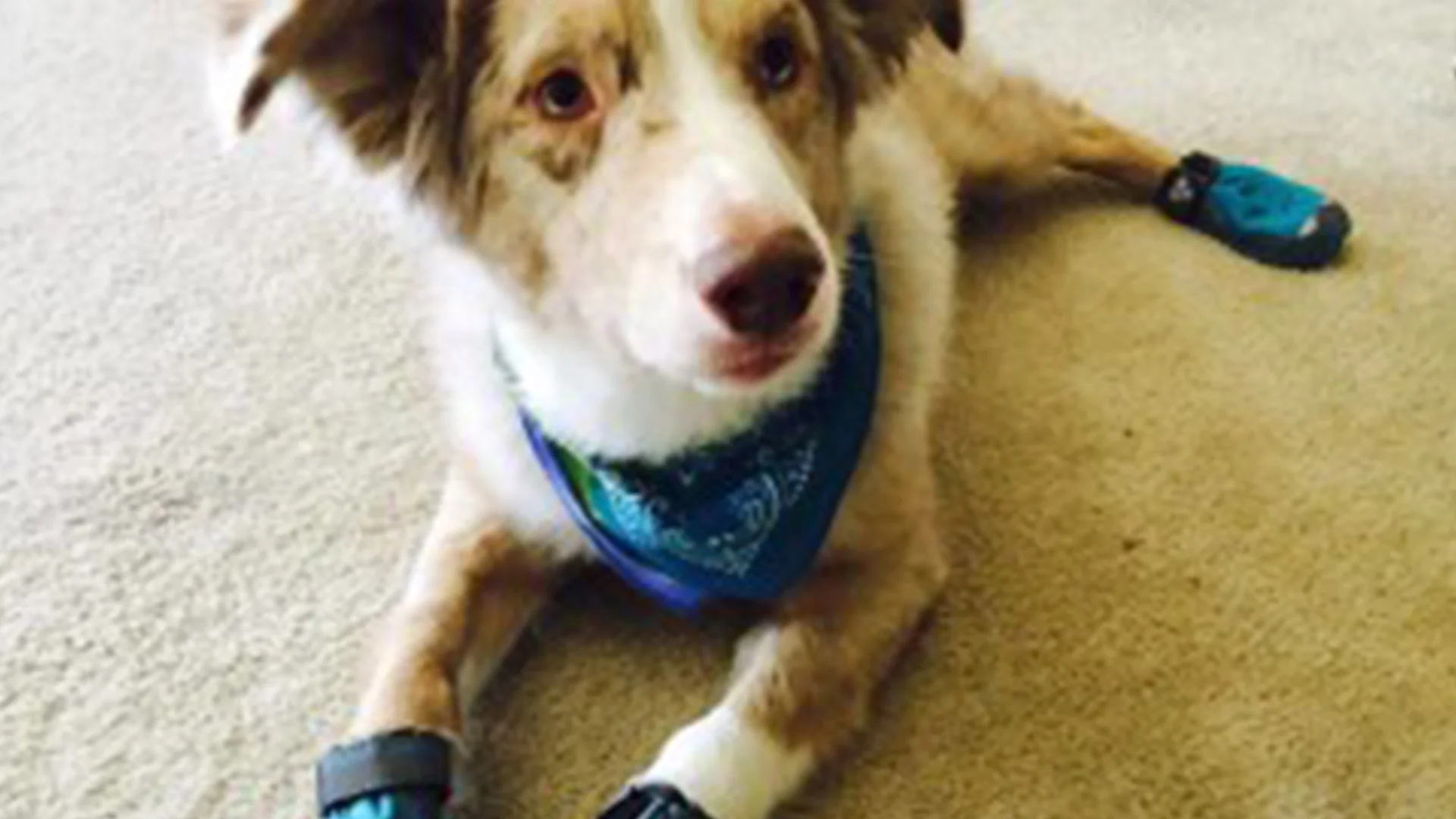
Boots may help with particular surfaces, weather or traction needs. They do not remove every hazard, and they are not necessary for every dog.
Choose for the actual use
Measure each foot as instructed by the maker. Front and back feet can differ. Check the intended surface, fastening and movement, and inspect paws before and after use.
A turned or slipping boot can signal an unsuitable fit or design; tightening harder is not automatically the solution. Avoid pressure, rubbing, trapped debris and changed gait.
Introduce them gradually
- Reward comfortable investigation of the boot.
- Practice voluntary paw handling in a position the dog chooses. Do not flip or pin it on its back.
- Try brief contact, then a short fitting on one foot when comfortable.
- Invite a few calm steps on a safe nonslip surface. Do not make an unstable dog run after scattered treats.
- Remove and inspect, then gradually add duration or other feet as the dog remains comfortable.
Pause for avoidance, discomfort or difficulty moving. Ask a veterinarian or qualified professional about pain or persistent problems.
Keep the outing safe
Avoid dangerously hot, icy or sharp surfaces rather than relying on a fixed air-temperature threshold. Protective gear cannot establish permission to enter a laboratory or restricted treatment area.
Check current model details and terms if considering a brand or discount. No boot can be promised to fit every dog or last forever.