
Originally published 2021-10-01. Reviewed and updated by Anything Pawsable on October 4, 2026.
A short, practiced answer can make an access conversation easier. You do not have to disclose your diagnosis to use a qualifying service dog.
The two ADA questions
When it is not obvious that the dog is a service animal, staff in a covered public setting may ask: “Is the dog a service animal required because of a disability?” and “What work or task has the dog been trained to perform?”
Answer honestly about trained disability-related work. For example, when accurate: “Yes. My dog is trained to retrieve my phone when I cannot reach it.” Do not use a task example that is not true for your team.
Staff may not require disability details, certification or a task demonstration under this ADA rule. A vague claim of comfort or a registry card does not substitute for the trained-task requirement.
Control and access
A service dog must be housebroken and under control. It generally must be harnessed, leashed or tethered unless that interferes with its work or the person's disability prevents use; effective control is still required by another means.
A dog that is out of control without effective corrective action, or not housebroken, may be excluded. The person must still be offered the service without the dog. Separate rules can apply in housing, employment and air travel, and state laws may provide additional protection for dogs in training.
For a disagreement, stay as calm as you can, ask for a manager and record the facts afterward. You do not have to turn every public interaction into a lesson.
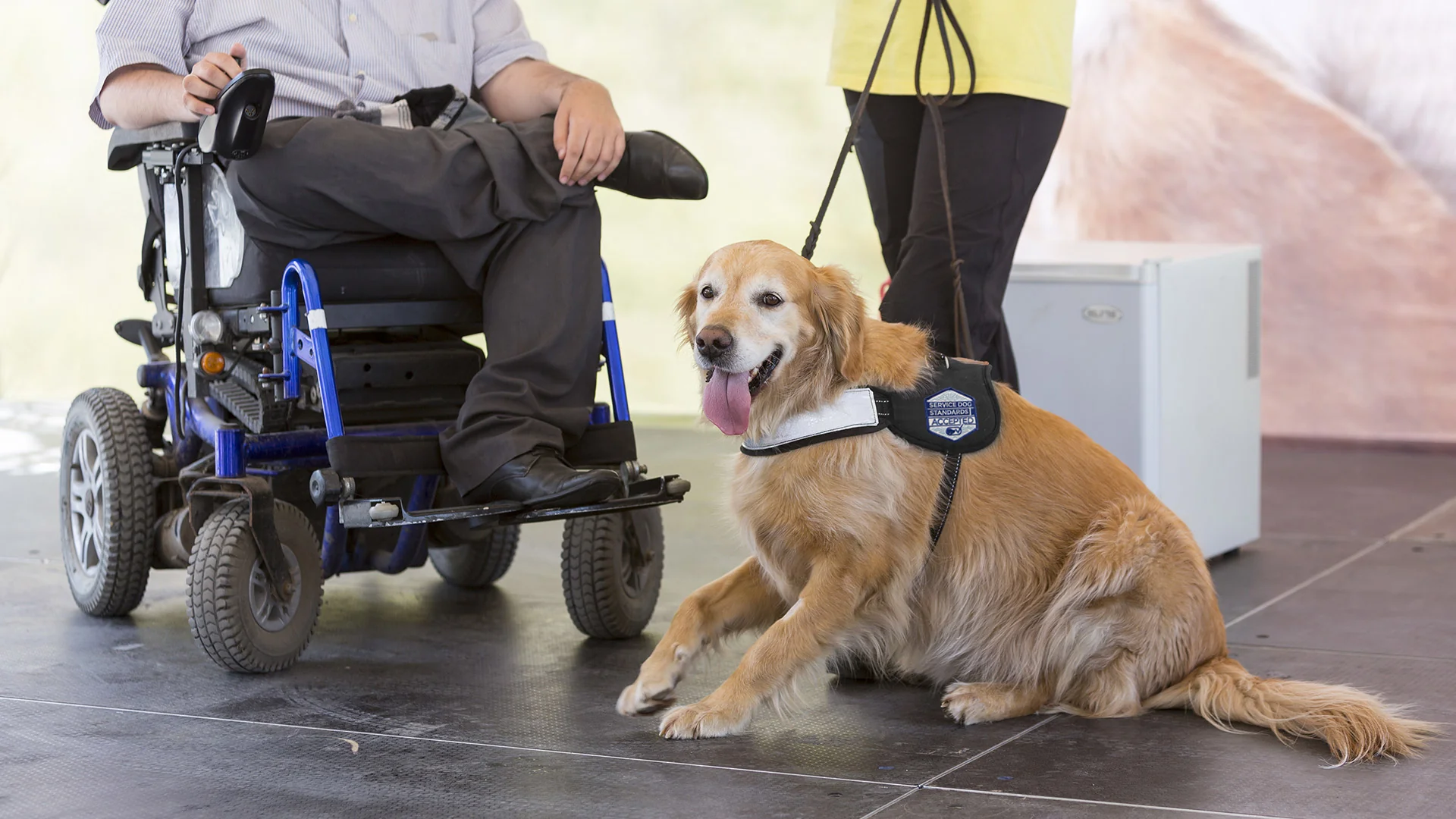
Learn the responsibilities behind your answers before your first outing. Service Dog Standards works alongside the Americans with Disabilities Act (ADA), providing training and behavior standards and foundational education for the human handler. Trainers use it to establish shared expectations for responsible public work. You can then practice accurate responses that fit your own dog’s trained tasks and your communication needs.