
Originally published 2013-07-10. Reviewed and updated by Anything Pawsable on October 4, 2026.
Service-dog rules depend on the setting. This guide summarizes key U.S. federal distinctions and is general information, not advice about a particular dispute.
Public services and businesses
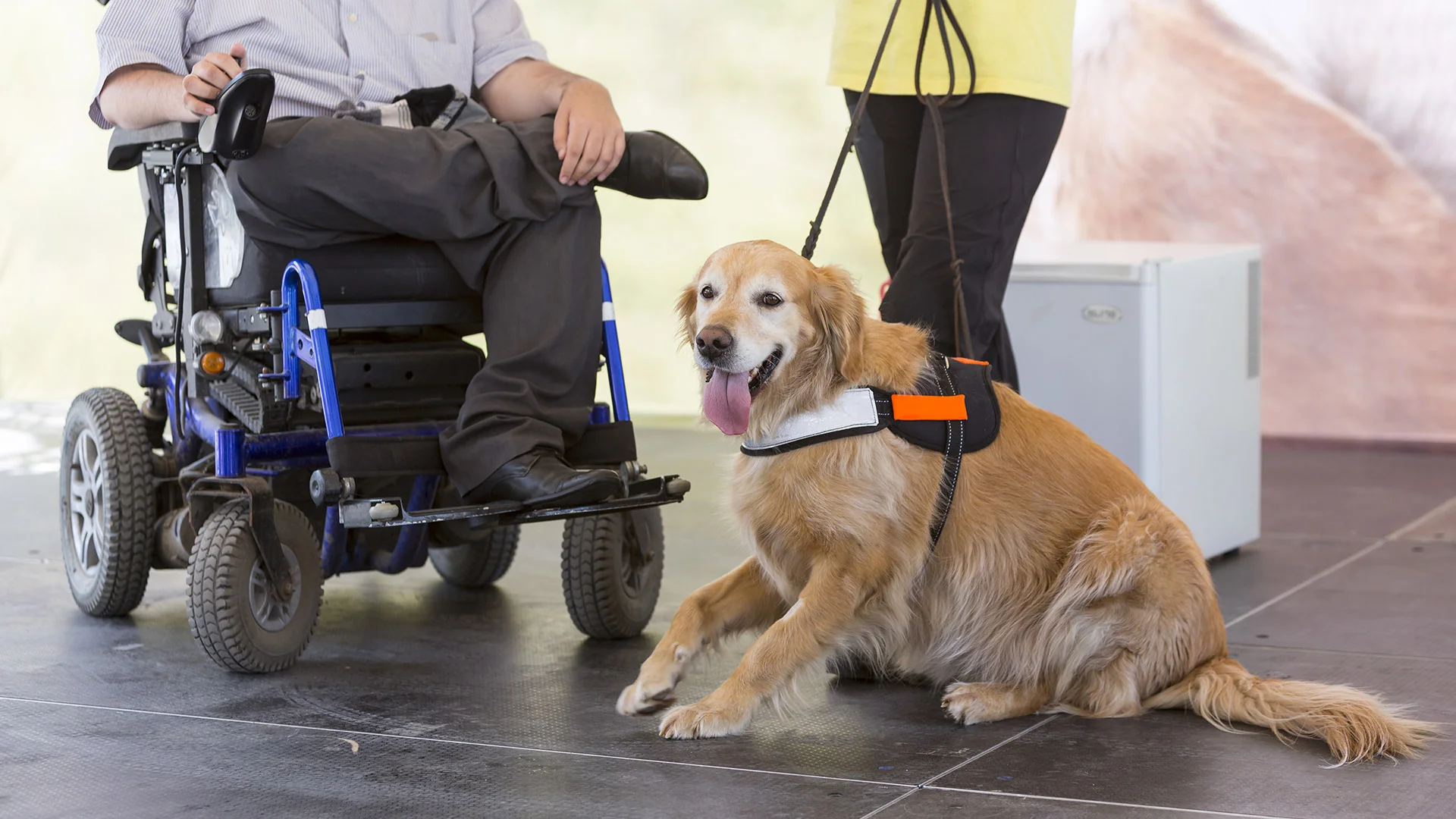
ADA Titles II and III generally permit a person with a disability to be accompanied by a dog individually trained in related work or tasks. State and local governments follow Title II; covered private businesses follow Title III. A trained miniature horse is considered under separate provisions and facility assessment factors.
When the need is not apparent, staff may ask whether the dog is a service animal required because of a disability and what work or task it has been trained to perform. They may not require diagnosis, service-dog certification or a task demonstration.
The dog must be housebroken and under effective control. A leash or tether is normally required, with exceptions where disability or safe task performance prevents its use and another effective means of control is maintained. The business is not responsible for dog care.
Exclusions and charges
A dog that is out of control can be excluded when the handler does not take effective action. A dog that is not housebroken can also be excluded. Other limited exceptions require the actual applicable assessment; ordinary fear or allergies are not enough. Proper exclusion of the dog still leaves the person an opportunity to obtain the service without it.
No service-animal surcharge may be imposed. Damage may be charged under the same policy used for other customers. A dog generally accompanies the person in permitted areas; this does not grant access to every restricted or sterile space.
Accessible reservations
The lodging regulation covers reservations made directly or through third parties. It requires accessible-room information and specified reservation practices, with particular exceptions for units outside the operator's control. Booking through a third party does not automatically remove these protections. Describe your specific accessibility needs when booking.
Service Dog Standards works alongside the Americans with Disabilities Act (ADA). The ADA establishes legal access protections; SDS provides detailed training and behavior standards and foundational education for the human handler. Trainers use that framework to prepare clients for the practical work of building and maintaining a safe, capable partnership. Legal rights and responsible preparation both deserve clear explanations; participation in SDS is not a condition of ADA access.
Other settings
Housing uses Fair Housing Act reasonable-accommodation rules and may recognize emotional-support assistance animals. Employment involves the ADA accommodation process. Air travel follows the Air Carrier Access Act and DOT regulations, including permitted forms. One public-access summary cannot substitute for those different rules.
The Code of Federal Regulations contains implementing regulations; it is not a separate law that the ADA merely extends. The central Title III service-animal provision is 28 CFR 36.302(c), not 36.202. Consult official sources and qualified advice for a specific problem.