
Originally published 2018-08-23. Article reviewed on October 4, 2026. Original publication: 2018-08-23.
Targeting means voluntarily touching a chosen point. A nose target can help teach positioning or an appropriate button task, but it does not make every pushing or physical-assistance task safe.
Prepare
Choose a safe, stable setting, small suitable rewards and a clear marker the dog understands. Use an accessible signal that works for the team. Keep sessions short.
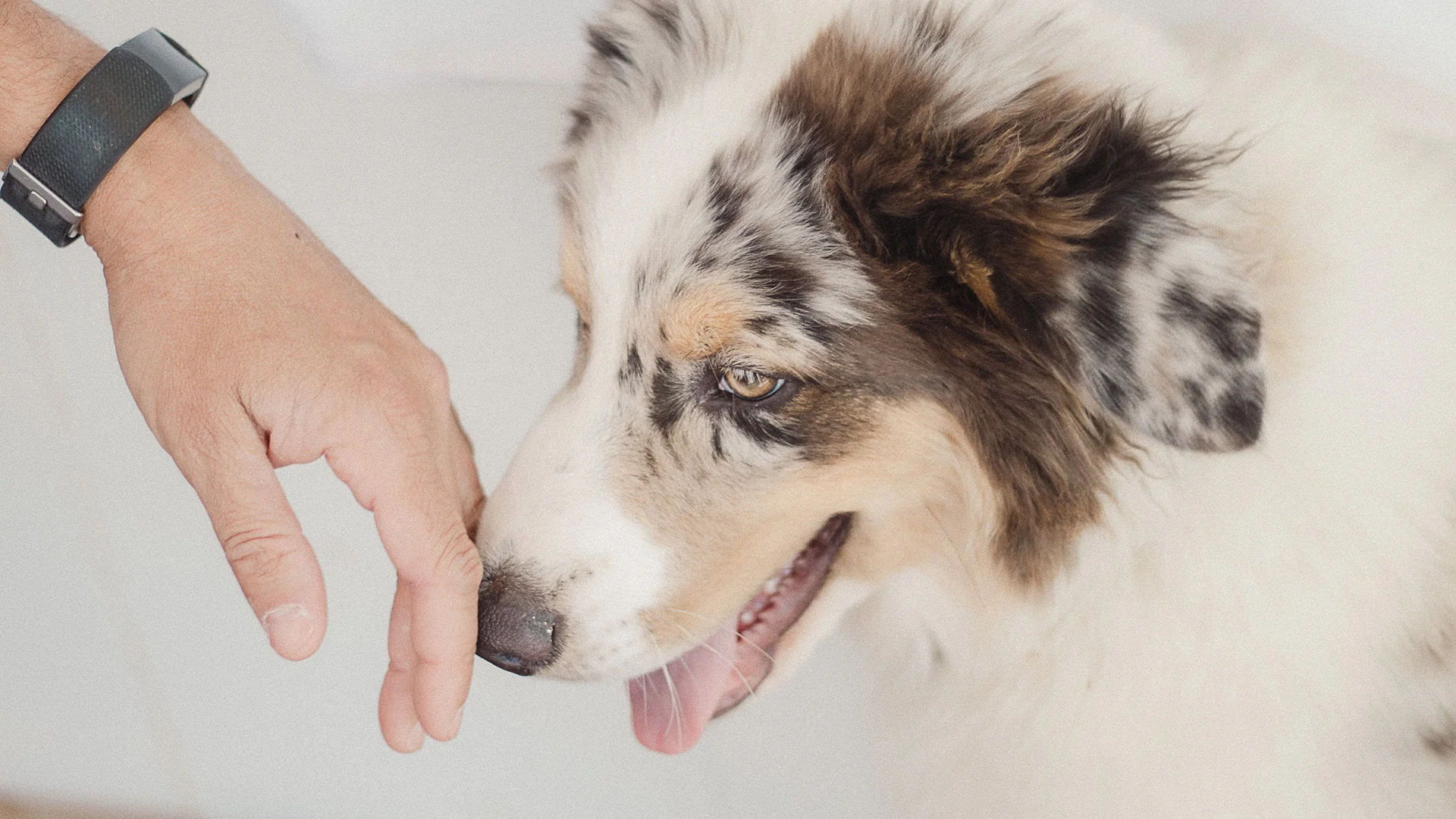
- Offer an empty hand near the dog's nose without crowding it. Mark and reward a voluntary investigation or light touch.
- Repeat a few comfortable successes. If the dog mouths your hand or becomes frustrated, make the step easier or pause.
- Add a cue once the touch is predictable, then move the hand a small distance or to another easy position.
- Introduce a safe visual target beside the familiar hand position. Reward a voluntary touch to it.
- Gradually move the target onto a stable surface and reduce hand help.
- Add distance or a mild distraction one small step at a time.
A clear, visible target can help; a specific sticky-note color is not compulsory. Do not require forceful nose punches, awkward stretches or reaching from an unstable surface.
Check whether touching a door, appliance or person is actually safe and useful before turning the foundation skill into a task. Respect the dog's comfort and choose another approach if needed.